• Home(ed)
  • Portfolio
  • Balinavian
  • Press
    • Press
    • Press inquiries
  • About
    • About us
    • Our team
    • The Scandinavian Style Savant
  • Contact
    • Contact us
    • Newsletter
Scandinavian interior design & decoration
  • Home(ed)
  • Portfolio
  • Balinavian
  • Press
    • Press
    • Press inquiries
  • About
    • About us
    • Our team
    • The Scandinavian Style Savant
  • Contact
    • Contact us
    • Newsletter

Mood Boards: The Ultimate Tool for Interior Design

Designing a space, whether it's a single room or an entire house, can be an exciting but overwhelming task. With so many options to choose from, it can be difficult to visualize a clear direction for the project. That's where mood boards come in. Professional stylists and designers use mood boards to test out various ideas and provide clients with a clear idea of the feel and style they are trying to achieve. But what exactly is a mood board, and how can you create one that's effective?

What is a Mood Board?

A mood board is a visual tool that helps to bring your design ideas to life. It's a collage of images, textures, colors, and materials that represent the overall style and feel of the space you are designing. Mood boards can be physical or digital, and they are an essential tool for organizing your thoughts and communicating your vision to others.

The Funnel Technique

When creating a mood board, it's essential to start with a clear idea of what you want to achieve. This is where the funnel technique comes in. The funnel technique involves starting with abstract ideas and gradually moving towards more concrete details as the project progresses. For example, if you are designing the interior of an existing room, the exterior of the house (the period, structural materials, color of the facade, neighboring buildings, and so on) can help you funnel your ideas from the abstract to the concrete.
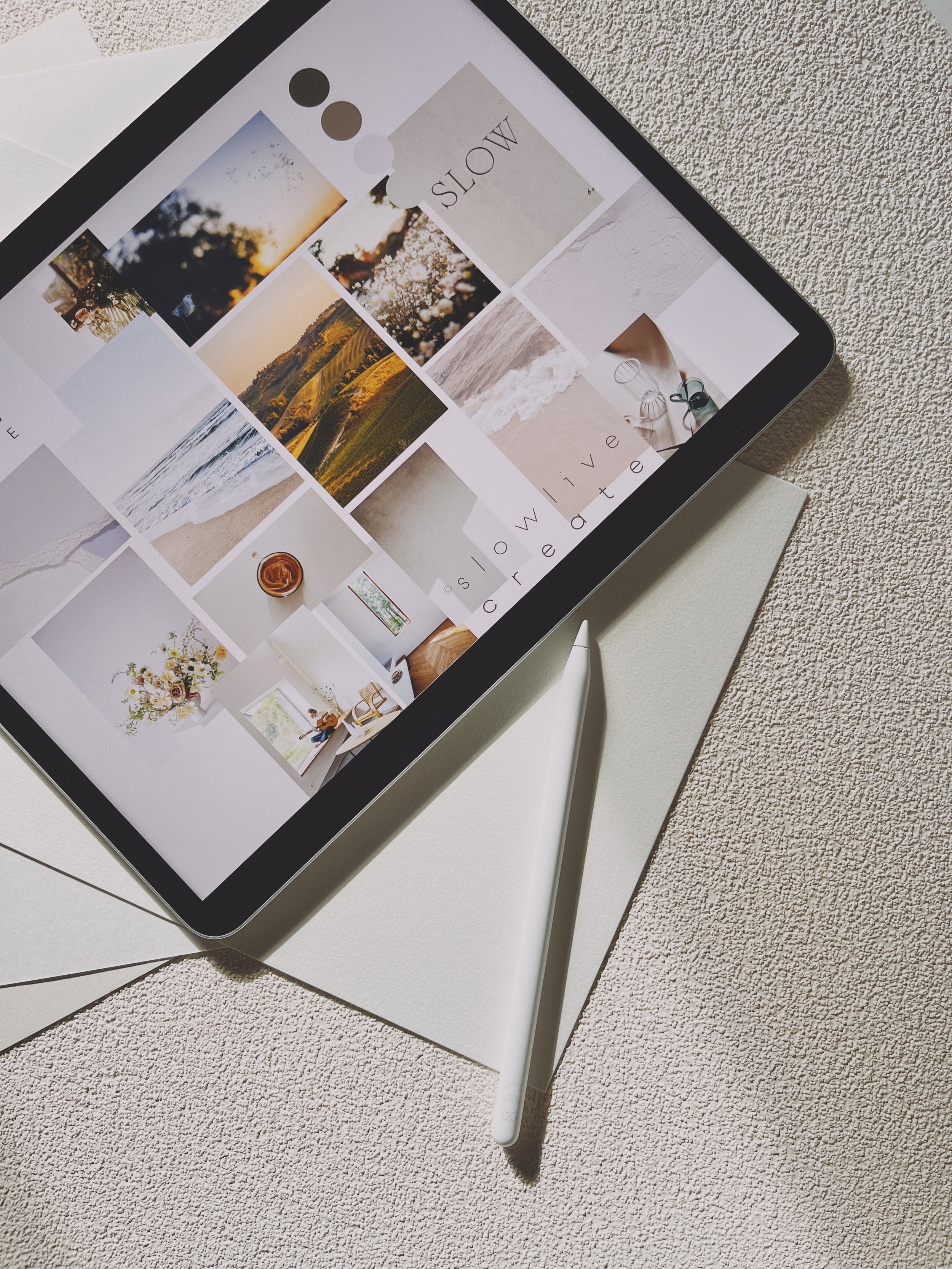
Photo by Crystal Y on Unsplash

Slicing the Pie

Another useful technique for creating a mood board is the pie chart. Draw a circle diagram and sketch in the different activities that will take place in the room as different-size slices of a pie. Think about how many hours of the day or week will be spent on each activity or which activities you feel are most important. This will make it easier for you to form an overview of the situation and to understand what the new design has to cater to.

The Ingredients of a Mood Board

There are no hard and fast rules when it comes to creating a mood board. However, there are some ingredients that are worth considering:

  1. Feel/Target: Try to formulate clear targets that reflect the lifestyle and feel you are trying to achieve. Search for photos and pictures that illustrate and symbolize the mood and the activity (or activities) you want to include.

  2. Exterior: Is there anything about the exterior of the house and its architecture that will help advance your interiors project? The color of the facade, the materials, the style, the history--anything at all that could kick-start your project?

  3. Styles: Once you've been through a huge number of photographs of interiors, the type and style of interior that speaks to you will begin to emerge. Remove anything that does not feel 100 percent you and be honest about what is achievable and what is out of reach.

Photo by Toa Heftiba on Unsplash

Creating a mood board can be a fun and rewarding process, and it's an essential tool for any interior design project. By organizing your thoughts and ideas, you can create a clear vision for your space and communicate it effectively to others. Remember to start with abstract ideas and move towards more concrete details as the project progresses, and be honest about your style and what is achievable. With a little creativity and planning, your mood board can be the ultimate tool for bringing your design ideas to life.

tags: interior design, Scandinavian Interior Design, inspiration, moodboard
Monday 12.11.23
Posted by Simone Elderot
 

What Does Your Home Say About You?

A home is much more than just a place to sleep at night; it's a reflection of who we are and what we value. With the rise of social media, we've become increasingly focused on using our homes and their design to project an image of ourselves to the world. But is this really the best approach to creating a cozy and harmonious living space?

Designing your own interior is not just about showcasing aspects of your character; it's also a way of adapting your decor to the kind of individual you are and the life you lead. By understanding and supporting the physical and psychological needs of our personality, we have a greater chance of creating a space that not only looks good but also makes us feel better.

Photo by Toa Heftiba on Unsplash

It's natural to want to be surrounded by nice things and be inspired by other people's ideas. However, we must not forget that many of the most important answers can be found only within ourselves. How we feel and react in different environments, which details trigger warm and pleasant memories, and what we do to make ourselves comfortable when no one else is watching are all valuable clues to creating a space that feels like home.

Establishing what you want and like is not so much a learning process, but more of a relearning process. We've all been influenced by external factors such as social media, magazines, and even our own past experiences. Taking the time to reconnect with ourselves and our personal preferences can help us create a space that reflects our true selves.

Photo by Annie Spratt on Unsplash

When it comes to designing your home, it's important to keep in mind that it's not just about showmanship; it's about comfort and ease. A beautiful space that's uncomfortable to live in isn't worth the effort. Instead, focus on creating a space that's functional, comfortable, and aesthetically pleasing.

Photo by Spacejoy on Unsplash

A home should reflect the individual who lives in it, rather than an idealized version of oneself. While it's natural to want to showcase aspects of our personality, we must not forget that the most important aspect of any living space is how it makes us feel. By taking the time to understand our own needs and preferences, we can create a home that's both beautiful and comfortable to live in.

tags: interior design, inspiration
Wednesday 12.06.23
Posted by Simone Elderot
 

Vase-tly Important: A Guide to Selecting the Perfect Vase for Your Bouquet

Hey there, it's the Scandinavian Style Savant, and today we're talking about something fun and fabulous – a vase selection! That's right, folks, we're going to explore the different types of vases that are ideal for various types of bouquets, and give you some tips on how to pick the perfect vase for your next floral arrangement.

First of all, let's talk about why vase selection matters. Sure, you could stick any old bouquet in any old vase, but if you really want to make those flowers pop, you need to think about the shape and size of the vase. A vase that's too small will crush your blooms, while a vase that's too large will leave your flowers swimming around like they're lost at sea. Plus, different types of flowers have different water requirements, so choosing the right vase can help keep your blooms fresh for longer.

So, without further ado, let's dive into the wonderful world of vase selection!

Slim Cylinder Vase with Base

Cylindar vase from Food52

First up, we have the slim cylinder vase with a base. This type of vase is perfect for a solitary cut flower – think a single rose or tulip. The slim shape of the vase ensures that the stem is held upright without collapsing or bending, and the sturdy base keeps it from toppling over.

V-Shaped Vase

V shaped Vases from Up-Island Pottery

Next, we have the V-shaped vase, which is ideal for long-stemmed cut flowers like roses and lilies. The V shape of the vase helps to support the stems and keep them from splaying outwards, while the heavy base keeps the vase stable and upright.

Waisted Vase

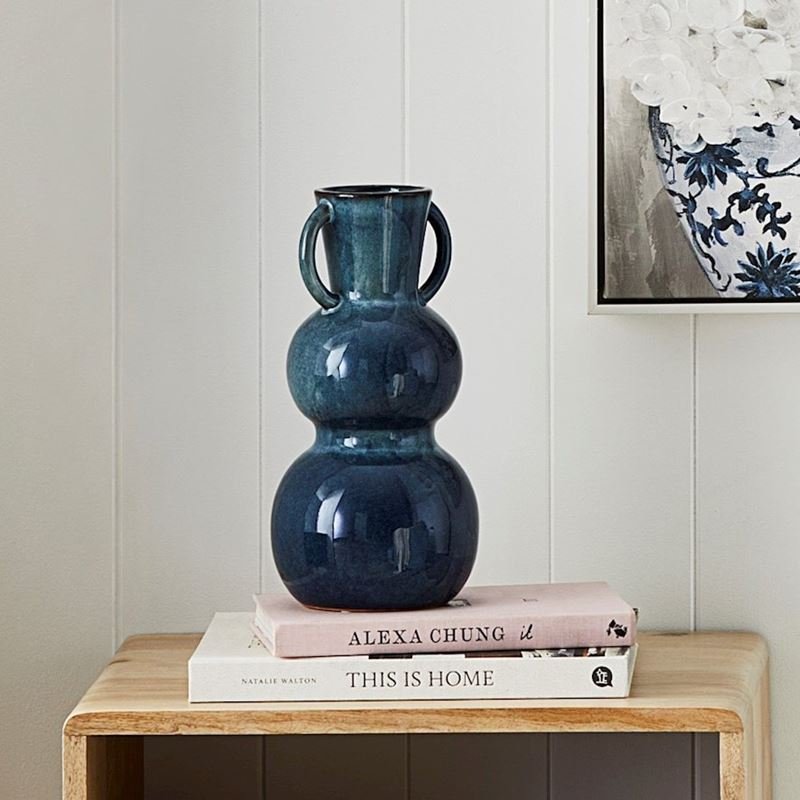
Waisted vase from Adairs.com

If you're looking to create a classic bouquet, a waisted vase is the way to go. This type of vase has a narrow neck that flares out at the top, allowing the stems to spread out while still remaining supported. It's also great for maxi bouquets, which are fuller and more bushy than classic bouquets.

Globe Vase

For a more modern look, try a globe vase. This type of vase is perfect for arrangements with lots of foliage and a few statement blooms. The round shape of the vase helps to create a natural-looking arrangement that's both chic and elegant.

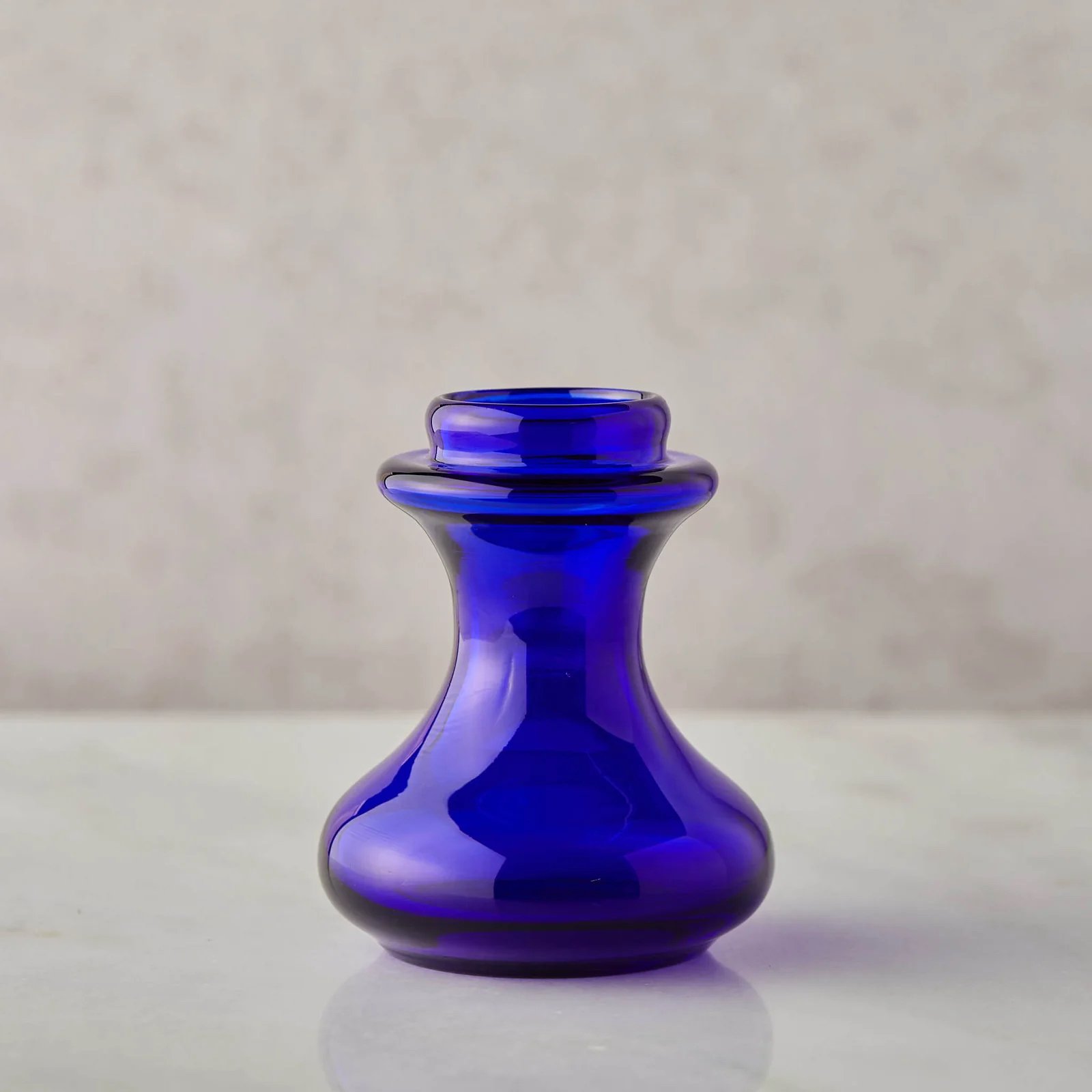
Bulb Vase

Bulb vase from Reed Smythe

If you're a fan of bulbs like hyacinths and amaryllis, you'll need a special vase to keep them happy. Bulb vases have an hourglass shape that allows the roots to sit in water while keeping the stems and leaves out of the water. This helps to prevent rot and keeps your bulbs looking fresh for longer.

Cylinder Vase

Last but not least, we have the trusty cylinder vase. This type of vase is perfect for long, straight stems like gladioli or delphiniums. The straight sides of the vase keep the stems upright and supported, while the height of the vase allows the blooms to stand tall and proud.

So there you have it – a guide to selecting the perfect vase for your next bouquet. Now all that's left to do is raid your cupboard and start experimenting! Whether you're a classic bouquet kind of person or prefer something more modern and funky, there's a vase out there that's just right for you. So get creative, have fun, and let those blooms shine!

tags: Vase, inspiration, interior design
Monday 11.27.23
Posted by Simone Elderot
 

Rugs and Sizes: How to Find the Perfect Fit for Your Space

Rugs are an essential element of interior design, but finding the right size for your space can be a challenge. A rug that's too small can make a room feel cramped, while one that's too large can overwhelm the space. So, how do you find the perfect fit? Here are some tips to help you choose the right rug size for your home.

Image from IKEA

Mirror the Shape of Your Furniture

One of the easiest ways to create visual balance in a room is to choose a rug that mirrors the shape of your furniture. For example, a circular dining table looks best on a round or square rug, while a rectangular or oval dining table is better on an oblong rug. In the living room, a good basic rule is that a rug should "embrace" the furniture that stands on it.

Consider the Size of Your Room

The size of your rug should be proportional to the size of your room. A rug that's too small can make a small room feel even smaller, while a rug that's too large can swallow up the floor and take over the room. The general rule of thumb is to choose small rugs for small rooms and big rugs for big rooms.

Measure Your Furniture

When choosing a rug for your space, it's essential to measure your furniture. In general, the best advice is to buy the biggest rug you can afford. If you skimp on the size of the rug, the furniture will overlap, and the chair legs will be out of balance and wobble. There is also a risk that the legs of the chairs will catch in the edge of the rug once you sit down and are trying to slide the chair closer to the table.

Think About Radial Balance

In general, avoid the combination of rectangular tables and round rugs and, likewise, rectangular rugs and round tables. When working out the size of your rug, don't forget to make allowances for any doors or other obstacles that open into the room. If you are thinking of a thick rug, you may find that its pile gets in the way of doors.

In the bedroom, the size of the rug should be proportional to the size of the bed. Stylists usually recommend having either a large rug that extends 24 to 28 inches out on each side of the bed and takes in or excludes the bedside tables, or two shorter rugs, one on each side of the bed.

Image from IKEA

In conclusion, finding the perfect rug size for your space can be a challenge, but by considering the size of your room, measuring your furniture, and thinking about radial balance, you can choose a rug that enhances your space's overall design. Remember, a rug that's too small or too large can disrupt the visual balance of your room, so take the time to find the perfect fit.

tags: Rugs, interior design, inspiration, living space
Monday 11.20.23
Posted by Simone Elderot
 

How to Style Your Bookcase: Tips and Tricks for a Stunning Display

A bookcase is more than just a place to store your books. It can be a statement piece in your home, displaying your personality, interests, and style. But styling a bookcase can be daunting - how do you arrange your books and other decorative items to create a cohesive and visually appealing display? In this post, we'll explore some tips and tricks for styling your bookcase.

Arrange by Alphabetical Order or Size

One of the simplest ways to organize your bookcase is by arranging your books in alphabetical order according to the author's surname. This method works best for those with large book collections, particularly if you need to find a specific book quickly. Fiction volumes tend to be roughly the same size, making alphabetical order the easiest style to work with. But, you can also arrange your books by size, assuming that not all your books are the same size. An arrangement according to the size of the books is probably the most restful on the eye, from small to large or vice versa.

Highest or Lowest Point in the Middle

An alternative to arranging the books from high to low (or low to high) is to have the high point or the low point in the middle of the shelf. This introduces a different shape and allows you to create some variation from shelf to shelf.

Use Books as Bookends

Use of bookends, image from Books By The Foot

If you don't have enough books to fill the whole shelf, a good and useful idea is to lay some of the books on their sides, spines facing the wall, and use them as bookends to support the others.

Rainbow Arrangement

Rainbow Arrangement, image from Books by the foot

A phenomenon of color-sorted bookshelves spread like wildfire on social media a few years ago. The basic idea is to arrange the spines of the books by color, with the aim of making the shelf resemble a rainbow. This can be an excellent alternative way of styling your bookcase, irrespective of whether you have the whole spectrum of colors available in your home library or you have to be content with a more neutral range.

Wrapping Paper

Kraft Wrapped books, image from Books by the Foot

Another method used by commercial stylists and real estate agents to anonymize or "calm" a bookcase in advertising photos is to cover all the books in the same wrapping paper. You can do the same. Vary the color of the covers according to your own taste and write the titles on the spines of the books in your best handwriting.

Complement with Decorative Items

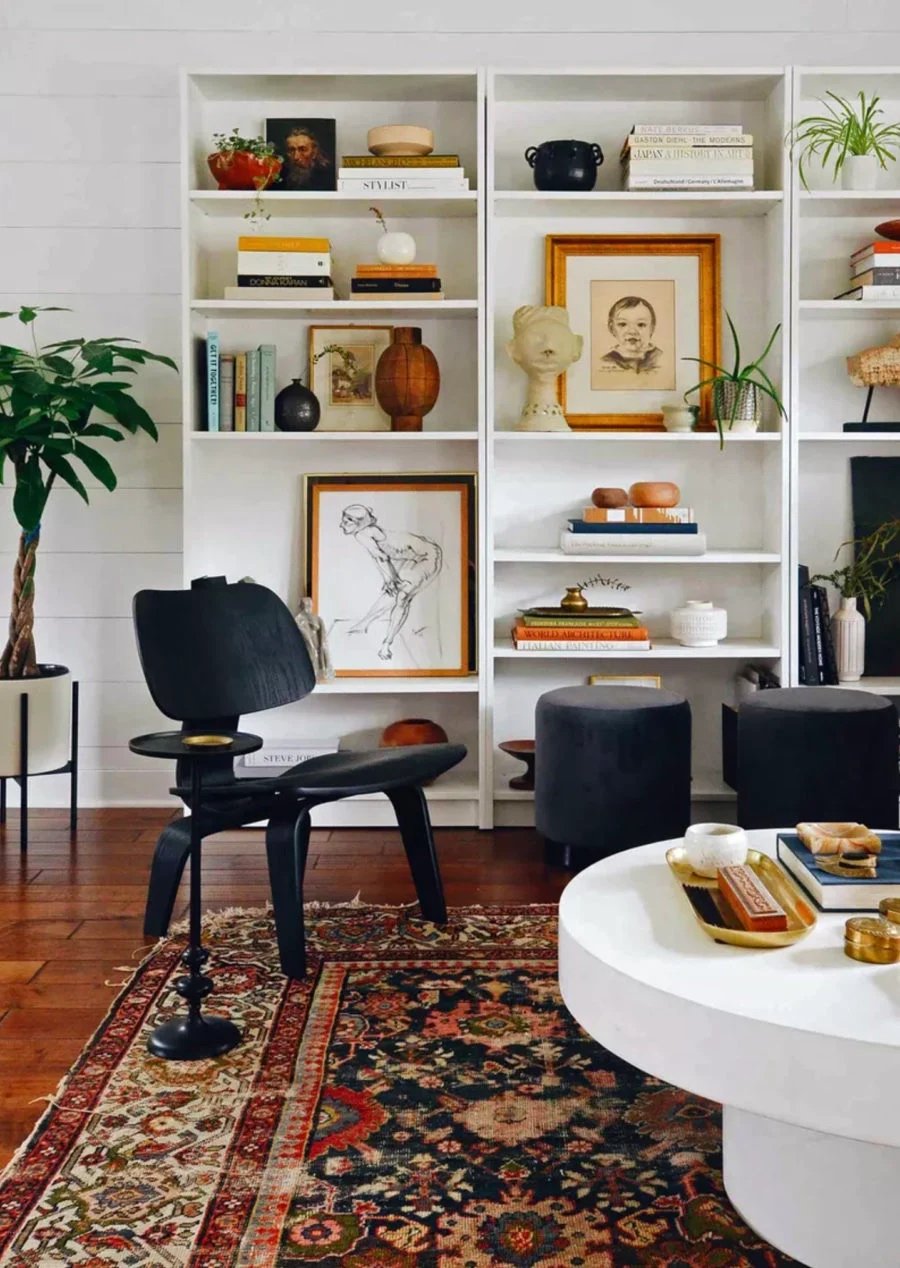
Stacks of newspapers, magazine files, boxes and cartons for small items, tins, vacation memories such as shells, pebbles, and souvenirs, sculptures, vases in a variety of materials, new candles or old candle stumps in a glass jar, display cases and glass domes, framed photographs, houseplants, and plants that trail down from the shelf are just a few examples of decorative items that can complement your books and add character to your bookcase.

Think About Visual Weight

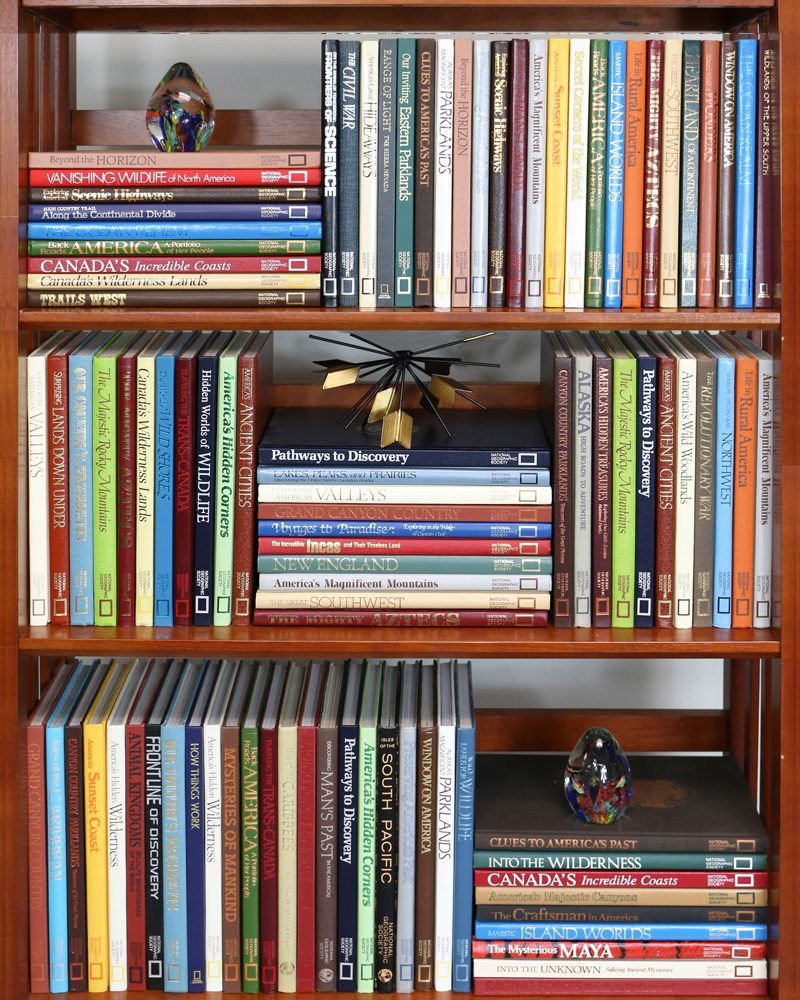
Place the heaviest books and objects on the lower shelves to create a sense of balance. Think about visual weight and ensure that the bookcase is not top-heavy, as it can create an unsteady look.

In conclusion, a well-styled bookcase is a thing of beauty. By following these tips and tricks, you can create a stunning display that showcases your personality and interests while keeping your books organized and accessible.

tags: interior design, books, personal style, inspiration
Monday 11.13.23
Posted by Simone Elderot
 

Greening up Your Space: Interior Design Tips to Bring Life to Your Home with Plants!

Alocasia Polly from Lively Root

Plants have become a staple in modern interior design, bringing a touch of nature and warmth to any space. They not only add aesthetic value but also have health benefits, such as improving air quality and reducing stress levels. However, not all plants are created equal when it comes to interior design. Mature, established plants have a unique charm and character that off-the-shelf plants cannot match.

Mature plants, particularly those that have been passed down through generations or have a personal history, bring context and personality to a space. Inherited plants can be a sentimental reminder of loved ones, while acquired plants can be a conversation starter or a way to showcase one's love for gardening. These plants have grown to their proper size and proportion, and their presence adds a touch of sophistication and maturity to a room.

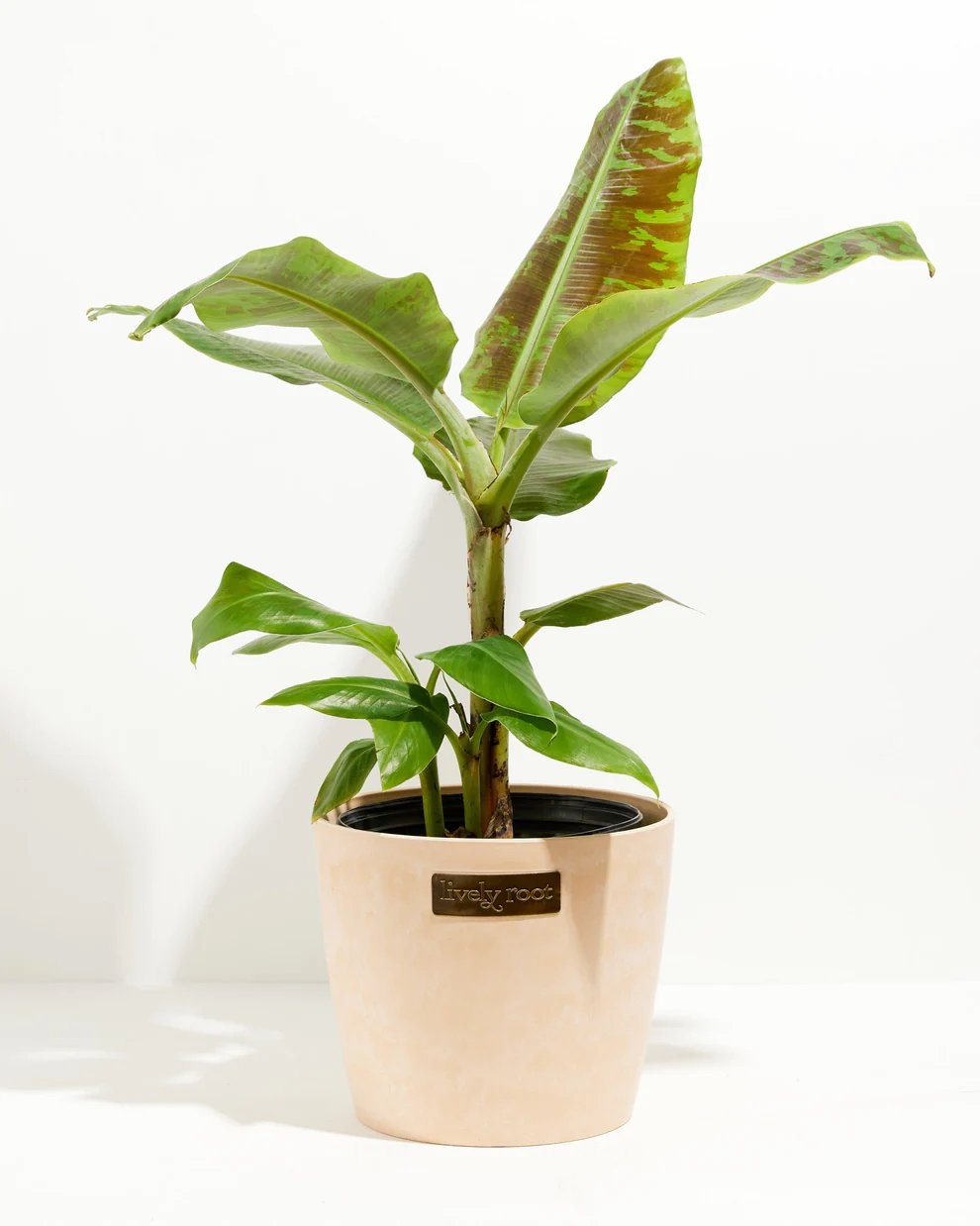
Musa Dwarf Cavendish Banana Tree from Lively Root

For those who may not have access to mature plants, designers suggest creating the illusion of a larger, more established plant by combining several smaller ones in a large pot. This trick not only adds volume to a space but also creates a lush and luxuriant look.

When choosing a plant pot, it is important to consider the size and proportion of the plant, as well as the style of the room. The pot should be in proportion to the visible plant above the soil level and coordinate with the dominant style of the room. Additionally, the pot should be about ¾ inch bigger than the diameter of the inner pot to allow for air circulation.

It is also worth investing in plants that can be propagated through cuttings, as this not only spreads the cost over multiple plants but also increases the variety of species in one's collection. Moreover, propagating plants can be a fun and rewarding hobby.

When renovating a space, it is recommended to move plants out temporarily to avoid damage from chemicals or strong smells. While health and safety regulations for indoor paints and floor treatments are now stricter, it is still better to be safe than sorry when it comes to the health of plants.

Zen Pet Friendly Collection from Lively Root

In conclusion, incorporating plants into interior design is a great way to create a warm and inviting atmosphere in any space. Mature plants add character and personality, while smaller plants can be combined to create a lush and established look. When choosing pots, size, proportion, and style are important factors to consider. Propagating plants is also a great way to increase variety and spread costs. With a little bit of planning and care, plants can transform any space into a green and vibrant oasis.

tags: houseplants, interior design, inspiration
Monday 11.06.23
Posted by Simone Elderot
 

Frame, Mat, and Glass: A Guide to Hanging Pictures on Your Walls

Have you ever hung a picture on the wall and just felt like something was off? Perhaps the frame looked too small or too big, or the picture was hung too high or too low. Hanging pictures can seem like a simple task, but there are actually several factors to consider in order to achieve the best results. In this blog post, we'll take a look at the importance of frame, mat, and glass choices, as well as general guidelines for hanging pictures.

The Frame Makes the Picture

As the saying goes, "Clothes make the man, the frame makes the picture." The choice of frame is primarily crucial, as it can make a huge difference to the picture, irrespective of whether it's a simple print or an expensive lithograph. The kind of wood or metal, the color, and the thickness or thinness of the frame can all have an impact on the overall look of the piece. Light-colored frames allow the picture to stand out, while dark-colored frames create contrast and balance images that have dark parts, such as black-and-white photos.

In addition to the frame, the choice of mat and glass is equally important. Acid-free paper is essential for preserving the artwork, as it will help it last longer. Good ultraviolet (UV) protection will also have the same effect on the durability of the artwork as the choice of mat and glass. The high-quality non-reflective glass will improve the clarity of the image and enhance your viewing experience much more than a cheaper solution.

pH Scale from Strath More Artist

The Importance of Mats

Mats serves two purposes: to prevent the image from pressing against the glass and to help throw light on the image. Mats are cut at an angle to help direct light onto the image, providing depth and dimension. When choosing mats, it's essential to consider the color and size of the mat in relation to the frame and picture.

Mat image from Fast Frame

General Guidelines for Hanging Pictures

There are several general guidelines to consider when hanging pictures on your walls:

  • Hang pictures behind a sofa or bed that covers only two-thirds of the wall behind the furniture.

  • Hang pictures at the optimal height, which depends on the height of your ceiling and the furniture that will be close to the pictures. A useful guideline is to work on the 145 principle, which means the center of the picture or of the wall of pictures should be at a height of 57 inches (145 cm) from the floor, which is the most pleasing height for an observer to view pictures.

  • Hang pictures in a row so that the midlines, baselines, or top lines of all pictures line up.

  • Choose the subjects and hang the pictures so that the eye is led diagonally upward.

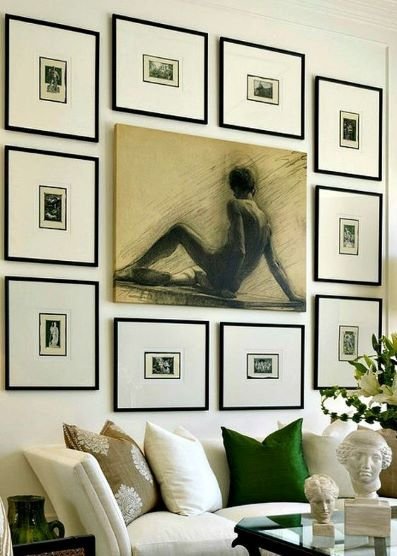
  • Mix vertical frames with horizontal frames and ensure that the frames of all pictures are an equal distance apart; 2 to 4 inches (5 to 10 cm) is about the right distance.

  • Hang many similar pictures in a repeating pattern or ensure that the height of the hanging cluster of frames mirrors the successive increase in height of the rising steps of the staircase.

The Tape and Cut-and-Paste Tricks

When hanging pictures, it's easy to make mistakes and end up with a bunch of nail holes in your walls. One way to avoid this is to use the tape trick. When you buy a new frame, there is often a sheet inside it on which the manufacturer has listed the measurements of the frame and other bits of information. You can test different positions for your pictures by taping the sheets on the wall instead of the frames.

Another trick is the cut-and-paste method. If you are using older frames, you can make your own sheets out of kraft paper or gift wrap. Draw around the edge of the frame and cut out the paper. 

tags: Frames, interior design, inspiration
Monday 10.30.23
Posted by Simone Elderot
 

Dress up your Windows with Style: A Guide to Choosing the Perfect Curtains

Curtains not only serve practical purposes but also add a decorative touch to any room. From providing insulation and privacy to creating an illusion of bigger or smaller space, curtains can work wonders in enhancing the aesthetics of your home. However, with so many options available in the market, choosing the perfect curtain can be overwhelming.

In this blogpost, we will guide you through the process of choosing the right curtains for your home, covering everything from the choice of fabric to the length and height of the rod. So, let's dive in and dress up your windows with style!

Why choose curtains?

Before we get into the nitty-gritty of choosing the right curtains, let's take a quick look at why curtains are essential for any home. Curtains not only add to the decor but also serve practical purposes such as insulation, privacy, and protection from sunlight. They also help in dampening acoustics, creating a cozy atmosphere, and preventing furniture and floors from fading.

Choosing the right fabric, color, and pattern

The fabric, color, and pattern of your curtains are crucial in setting the tone for the room. Thick velvet curtains can create a luxurious ambiance while flowing fabrics can soften the harsh angles of a modern space. Interior designers often use curtains to create optical illusions and make a room feel bigger or smaller.

When choosing the fabric, consider factors such as insulation, light filtration, and privacy. The color and pattern should complement the decor of the room and reflect your personal style.

Rail or Rod?

Image from Spotlight Stores

The next decision to make is whether to use a rail or a rod. The classic curtain rod with wall brackets is relatively easy to install and can be either unobtrusive or a decorative element in itself.

Length and Height of Curtain Rods

To determine the length of the rod and where to mount it, measure the width of the window frame and add at least 4 inches to each side. Then, mark at least 4 inches up from those points to mount the brackets. Consider adding extra width and height if you want to create an illusion of a bigger window.

Measuring 1 inch from a quarter dollar coin from Measuring stuff

How Long Should Curtains Be?

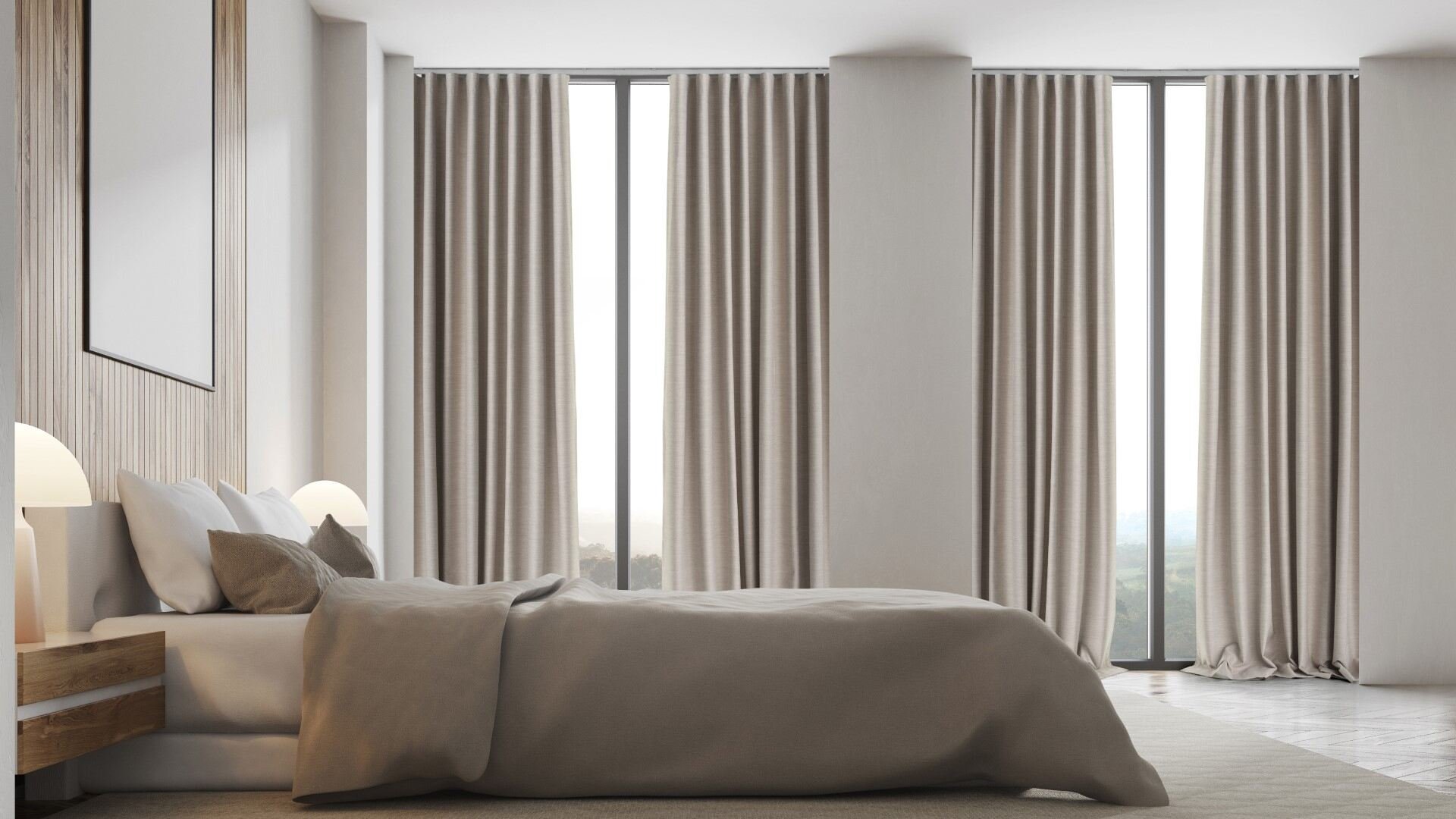
The length of your curtains depends on personal taste and style. Medium-length curtains usually reach from ¾ to 1¼ inches below the window frame, while full-length curtains should stop ¾ to 1¼ inches below the floor or just graze it for a polished look.

Conclusion

In conclusion, curtains serve both practical and aesthetic purposes, and choosing the right curtains can transform the look and feel of a room. By considering factors such as fabric, color, pattern, rail or rod, and length, you can find the perfect curtains to suit your style and needs. So, go ahead and dress up your windows with style!

tags: Curtains, interior design, inspiration
Monday 10.23.23
Posted by Simone Elderot
 

Mixing Styles: How to Create Harmony in Your Home

Do you find yourself drawn to multiple styles of interior design, but aren't sure how to incorporate them all into your home? Perhaps you're living in a home with a character that doesn't suit your tastes or you share your space with someone whose style preferences are very different from your own. Don't worry; it is possible to mix different styles and create a cohesive and beautiful space. In this post, we'll explore some tips and tricks to help you create harmony in your home, even when working with disparate styles.

Dominance and Spice

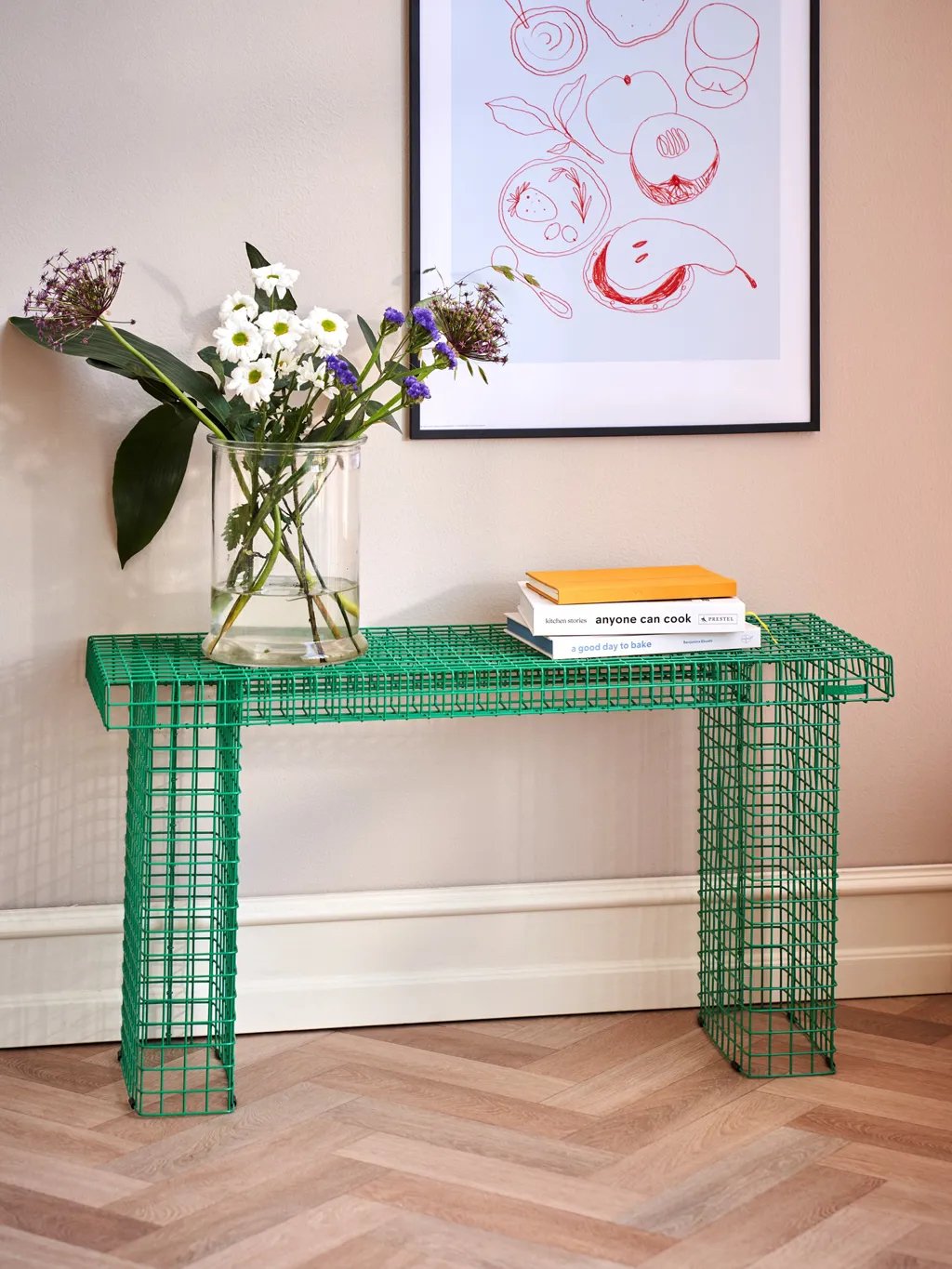
Green wire bench from Sostrene grene

One key to successfully mixing styles is to let one style dominate while using another to add "spice" to the overall look. Instead of trying to create a perfect 50/50 split between styles, aim for an 80/20 split, where one style is clearly dominant while the other adds interest and variety. When it comes to large furniture items like sofas, beds, or dining tables, it's best to stick to an agreed-upon style to maintain consistency and avoid clashing. The "spice" elements can be incorporated through smaller details like artwork, lighting, or decorative accessories.

Style Triangles

If you prefer to work with three styles, consider using a style triangle. Two related styles serve as the base, while a contrasting style adds the "spice." For example, Scandinavian and Japanese minimalism could serve as the base, while a rustic element adds interest and variety. However, it's important to avoid using too many styles, as it can lead to a disjointed and cluttered look.

Color Harmony

Introducing a common color theme is an excellent way to create harmony between disparate styles. Using similar color palettes throughout the space will help connect different parts of the room and create a cohesive look. However, be mindful of using too many colors, as it can become overwhelming.

Avoid Clusters

One common mistake when mixing styles is to cluster all of the "spicy" elements together in one area, which can create a jarring effect. Instead, try to spread these elements throughout the room to create balance and harmony.

Same Mood, Different Styles

Image from Bobby Berk

While it's not necessary for all the details in your home to match, they should contribute to the same overall mood. For example, if you're looking to create a relaxed and casual vibe, avoid using overly formal furniture styles that clash with the mood you're trying to achieve.

In conclusion, mixing different styles can be a fun and creative way to personalize your living space. By following these tips and tricks, you can create a harmonious and cohesive look, even when working with seemingly disparate styles. Remember to let one style dominate while incorporating "spice" through smaller details, consider using a style triangle, use color harmony, avoid clustering, and aim for a consistent mood throughout your space. With a little bit of creativity and some thoughtful planning, you can create a beautiful and unique home that truly reflects your personal style

tags: Harmony, Scandinavian design, interior design
Monday 10.16.23
Posted by Simone Elderot
 
Newer / Older
 

Work

Portfolio

How we work

Press

About

Our Team

Reviews

Our Ethos

Contact

Contact Us

FAQ

Client form

Sign up for our Newsletter


© All rights reserved Stockhomed 2024